Thursday, May 13, 2010
http://www.alternet.org/food/146163/poop_is_the_most_important_indicator_of_your_health#
Sunday, May 2, 2010
Dandelion Wine
Well, finally, the last day, we did the most perfect plant imaginable: dandelions. Perfect because I have been wiggling my toes in dandelions. Frying up the blossoms as fritters. Drinking root tea. Eating the greens. Dandelions are food, medicine, muse. Euell Gibbons stalked wild asparagus. Me, I crave and hunt dandelions. We are in the midst of a dandelion honeymoon. Why just this week we bottled our first batch ever of dandelion wine.
Now, when Rick and I married, he went out and bought me a copy of Dandelion Wine, Ray Bradbury's lyrical and evocative tale of a Midwestern childhood. Told me I had to read it (that and
Death Without Weeping, but that is a whole 'nother story!) But I only understood why the other day, when I had a sip of that sweet nectar . . .which is the smell of sunshine on an absolutely still August day, flies buzzing around my head, sweat making my shirt stick to my back. It's the juice of just-picked tomatoes dripping down my chin. It's hanging wet sheets on the line with my grandmother, standing barefoot in the cool grass.For this first attempt at dandelion wine, I used Susun Weed's recipe from Healing Wise, after leafing through a stack of books that had no recipes. I guess it's an old fashioned, out-of-favor sort of thing. Now most people think it's cool to be hatin' on dandelions. Too bad, because they are so, um, good for us (d0 you really care?). They taste good. Honest! They are pure sunshine! Ok, they're fun. We can be crazy-wise and use something others revile--enjoying a secret they couldn't even imagine all the while.
I am sure I won't convince many in a short post of the passion I feel about this. All I can do is give you some advice:
You can read the book, or you can make some wine. Your choice. Trust me: either way, you'll be transported.
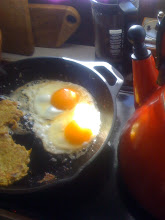
And, by the way, the picture turned out pretty good too.
Sunday, April 25, 2010
What happens in the Spring? Babies!
So what do I recommend for a healthy pregnancy?
Relax.
Ask for (and accept) help.
Eat Real Food (and don't worry about how much).
Does that seem too simple? Well, of course there are details (and yes, the devil is in the details, I know). But if you can remember those basic points, you are on your way.
Relax means to take care of yourself, to slow down. Look at your life now and see what can be pared away, because babies add an amazing amount of work, need for attention and tiny socks that have lost their mates. They do not want to compete with your weekly tennis match, your college roommate or even your job. If you really need the job, think now about how you are going to juggle--don't wait until you are a couple of weeks from your due date. Having the details nailed down early gives you the space to be fascinated with your changing body and life. Take bubble baths, walk barefoot in the dirt, start a yoga practice. Spend time alone with your sweetheart (this gets harder for a while--trust me).
Asking for help allows others to care for you, to "mother the mother". It is the natural order of things, as we can't do everything. Really. If you don't have a village, find one. But don't fret too much about it, because tribes have a way of gathering around new mamas. Just allow it to happen when it does. Look for like-minded women to share your mothering journey. Try out mom's groups and La Leche League--yes, while you are pregnant. Having this support will come in handy when you want to know if that's a foot poking through your ribs or you are so tired you can't think what to make for dinner. Other women who have "been there" will tell you that it's normal (no, the foot won't make it through to the outside, no matter what you think Little Guy's chances are on the soccer field) or bring you dinner (don't forget to ask) and will generally act like the aunties we are all missing in modern America. And that's something we all need.
The Real Food part of the equation: there are some great books out there (see http://www.realbabyfood.info/ for one) and, of course I recommend Nourishing Traditions for anyone, pregnant or not (there's a good introductory section on pregnancy nutrition under "Feeding Babies"). But beneath the details, which we'll get to, there is one really important principle: if you are eating REAL FOOD with no junk, no food empty of nutrition, you can trust your body to tell you what it it needs. Cravings almost always point to a need--you just have to learn what they mean. And aversions often point to an allergy or to something that really isn't good for you at that time. If you crave ice-cream, you might need more good fat. If you crave pickles, you might need . . . pickles! Just make sure they are the real deal, lacto-fermented goodies replete with good flora for your gut.
I know you want details, so here's my list of the basics:
75-100 grams of protein a day-- from meat, seafood, dairy and eggs
2 or more eggs a day, plus extra yolks (in smoothies, etc)
Dairy--a quart of milk or the equivalent in yogurt, cheese, etc
Fats--butter, coconut oil, Cod liver oil (1-2 tsp. daily of CLO)
Liver--1-2 times/week
Seafood--2-4 times/week. Especially fatty fish, shellfish and fish eggs.
Dark green vegetables--daily
Yellow/orange fruits and vegetables--daily
Sea Salt to taste--very important! This actually helps prevent hypertension
Ferments--such as yogurt, kombucha, sauerkraut, daily
Bone broth--including skin and cartilage, in soups and sauces, daily
Soaked grains--as tolerated, daily
Herbal infusions--such as nettle/oatstraw/red raspberry leaf, daily, liberally.
If dairy is a problem, use plenty of bone broth and make sure you are getting protein from other sources. You can use coconut milk for creamy soups and smoothies, which will give you good fat as well.
If grains/starches are an issue, don't worry--there are plenty of carbohydrates in vegetables, fruits and nuts. Remember, eat what you like that likes you!
Though this may seem like an enormous amount of protein, it has been shown to help prevent toxemia of pregnancy, in addition to supplying the building blocks of your new baby. It also may prevent swelling (which is a symptom of pre-eclampsia or early toxemia). So go ahead and eat a steak!
A word about quality: All of the animal foods should be pastured or wild--this is the only way to ensure that you are getting the proper ratio of omega 3 to omega 6 fatty acids. I know it's expensive, but sick kids cost more than pastured hamburger. It's good to have organic produce, but that is not as critical as getting the best meat and milk you can afford. The dairy should be raw (but go to the farm--is it clean? If you are not certain, get unhomogenized, low-temperature pasteurized milk, local if possible) or get raw milk cheeses. You can make kefir or yogurt from pasteurized milk, which will restore some of the good bacteria. Make ice cream with honey, egg nog, custard. Indulge in comfort food!
Meals don't need to be fancy, they just need to be nourishing and pleasing. There's nothing wrong with "cheap cuts" of meat--they have more flavor and nutrition, and some of the world's renowned dishes were inspired by them (think oxtail stew, lamb shanks, osso buco). What these require is time, to tenderize the meat and extract all of those nutrients, so use a dutch oven or crock pot and let your dinner cook while you soak in the tub!
Clearly, there is more to know than a short article can address. I really don't want to leave you high and dry. I know that when you are newly pregnant, many things seem highly improbable: How am I going to eat all of this? How am I going to manage those pins? And just HOW is that baby going to get out of my belly? Well, you will eat all of that and more--you will be SO hungry. I used pins and I have never poked a baby, but now they have these cool snappy things, so you don't have to learn if you don't want to. And, well, I can explain about that last one, but you might not believe me. Let's talk in nine months, ok?
Friday, April 2, 2010
Tradition
I cut the marshmallows with marshmallow cutters (found, of course, at Williams Sonoma some years ago) into chicks and bunnies--the chicks get rolled in yellow-tinted coconut (think Peeps) and the bunnies in cocoa powder (so velvety! so cute!) I know, how obsessive can we get?, but last year was so full with the move and all that we didn't do the homemade candy or the scavenger hunt, so I feel like I need get back to normal already.
I am looking for some new recipes, but can't find anything earth shaking. I might flavor the brittle the way my sister did for her wedding favors, with the Persian twists of rose water and saffron. And I am thinking of doing the truffles with coconut cream so I can have some, but otherwise, Tradition Prevails.
It is Spring therefore It Is Raining. Not great conditions for candy making--terribly humid, but there you go: I don't make the calendar, I just respond to it. So Easter candy it is. No matter what the experts say. If it all turns out, I will have to post pictures for you. Just please, help me to remember that the marshmallows are drying out in the turned-off oven, or we might disappoint the kids two years in a row . . .
Monday, March 29, 2010
Spring!
As a matter of fact, I have been out picking nettles and dandelions, cleavers and chickweed, for about a month. I can't begin to tell you what a pleasure it is to shift from winter roots and brassicas to fresh, tender leaves . . . I had been wanting to cut down on the starchier roots we have been eating--the rutabegas and parsnips, as yummy as they are--and here Spring has done the job for me. Now there is such an abundance of fresh herbs and vegetables that each week we are adding something new, crowding out the winter staples.
I am still working on using up what we stored for the winter, all the while making mental notes about what approach to take this year. We have used up most of the applesauce, but have luscious canned Italian plums left (thanks to Joy!) We are carefully guarding the raw rose-hips preserve and the syrup I made in the early winter--at least until the fresh berries come in June. (I did make a yummy barbeque sauce for lamb riblets with the syrup and chipotle pepper last night.) We also have frozen berries, probably enough to last until June. There are jars of tuna--oh, I must post the photos of the Tuna Project! And pickles, though I think these won't be enough to last until new cucumbers are ready. I have had to make more kraut, but I just acquired an old-fashioned cabbage shredder, so next time I will do this in real quantity, enough to last the year. I still have most of the dried string beans ("leather britches"), which I ended up not using much of, though we did like them.
The hold has proven to be an admirable root cellar. We have a year-round market, so I don't need to actually store roots, but the home-canned goods, the ferments, the wines and ciders, are keeping marvelously. I am not sure if the wines will last until next Fall's production is ready, but only because they are so delicious that we have not been able to pace our consumption to the amount we have. We'll learn how much to make each year as the years go by . . .
So Spring. A good time to look back and forward at the same time. To see how we have weathered our first year here--well, I believe (granted it was a mild winter). To literally take stock. Last year we had such a steep learning curve: so many new skills and tools to acquire, so many wild foods to recognize, so many resources to identify. We have new projects planned for the summer, painting and such. I would like to learn a new food-related skill and some new plants to enjoy this year--and every year. In all, though, it should be more relaxed around here as we assimilate into our new community, our new foodshed.
We love it here--come enjoy the seasons with us!
Monday, February 15, 2010
It's Now More Dangerous to Give Birth in California Than It Is in Kuwait or Bosnia | AlterNet
For the doubters out there about how our nation's strange policies affect our health and well-being . . .
Friday, January 29, 2010
How Eating Grass-Fed Beef Could Help Fight Climate Change -- Printout -- TIME
Well, I'll be . . . Mainstream attention to this issue is so rare, I am almost in shock to see such a balanced portrayal. Read it!
Thanks to Wendy Mathias of Miami Real Food for bringing this to my attention!
Monday, Jan. 25, 2010How Cows (Grass-Fed Only) Could Save the Planet
By Lisa Abend
On a farm in coastal Maine, a barn is going up. Right now it's little more than a concrete slab and some wooden beams, but when it's finished, the barn will provide winter shelter for up to six cows and a few head of sheep. None of this would be remarkable if it weren't for the fact that the people building the barn are two of the most highly regarded organic-vegetable farmers in the country: Eliot Coleman wrote the bible of organic farming, The New Organic Grower, and Barbara Damrosch is the Washington Post's gardening columnist. At a time when a growing number of environmental activists are calling for an end to eating meat, this veggie-centric power couple is beginning to raise it. "Why?" asks Coleman, tromping through the mud on his way toward a greenhouse bursting with December turnips. "Because I care about the fate of the planet."
Ever since the U.N. Food and Agriculture Organization released a 2006 report that attributed 18% of the world's man-made greenhouse-gas emissions to livestock — more, the report noted, than what's produced by transportation — livestock has taken an increasingly hard rap. At first, it was just vegetarian groups that used the U.N.'s findings as evidence for the superiority of an all-plant diet. But since then, a broader range of environmentalists has taken up the cause. At a recent European Parliament hearing titled "Global Warming and Food Policy: Less Meat = Less Heat," Rajendra Pachauri, chairman of the Intergovernmental Panel on Climate Change, argued that reducing meat consumption is a "simple, effective and short-term delivery measure in which everybody could contribute" to emissions reductions.
And of all the animals that humans eat, none are held more responsible for climate change than the ones that moo. Cows not only consume more energy-intensive feed than other livestock; they also produce more methane — a powerful greenhouse gas — than other animals do. "If your primary concern is to curb emissions, you shouldn't be eating beef," says Nathan Pelletier, an ecological economist at Dalhousie University in Halifax, N.S., noting that cows produce 13 to 30 lb. of carbon dioxide per pound of meat. So how can Coleman and Damrosch believe that adding livestock to their farm will help the planet? Cattleman Ridge Shinn has the answer. On a wintry Saturday at his farm in Hardwick, Mass., he is out in his pastures encouraging a herd of plump Devon cows to move to a grassy new paddock. Over the course of a year, his 100 cattle will rotate across 175 acres four or five times. "Conventional cattle raising is like mining," he says. "It's unsustainable, because you're just taking without putting anything back. But when you rotate cattle on grass, you change the equation. You put back more than you take."
It works like this: grass is a perennial. Rotate cattle and other ruminants across pastures full of it, and the animals' grazing will cut the blades — which spurs new growth — while their trampling helps work manure and other decaying organic matter into the soil, turning it into rich humus. The plant's roots also help maintain soil health by retaining water and microbes. And healthy soil keeps carbon dioxide underground and out of the atmosphere.
Compare that with the estimated 99% of U.S. beef cattle that live out their last months on feedlots, where they are stuffed with corn and soybeans. In the past few decades, the growth of these concentrated animal-feeding operations has resulted in millions of acres of grassland being abandoned or converted — along with vast swaths of forest — into profitable cropland for livestock feed. "Much of the carbon footprint of beef comes from growing grain to feed the animals, which requires fossil-fuel-based fertilizers, pesticides, transportation," says Michael Pollan, author of The Omnivore's Dilemma. "Grass-fed beef has a much lighter carbon footprint." Indeed, although grass-fed cattle may produce more methane than conventional ones (high-fiber plants are harder to digest than cereals, as anyone who has felt the gastric effects of eating broccoli or cabbage can attest), their net emissions are lower because they help the soil sequester carbon.
From Vermont, where veal and dairy farmer Abe Collins is developing software designed to help farmers foster carbon-rich topsoil quickly, to Denmark, where Thomas Harttung's Aarstiderne farm grazes 150 head of cattle, a vanguard of small farmers are trying to get the word out about how much more eco-friendly they are than factory farming. "If you suspend a cow in the air with buckets of grain, then it's a bad guy," Harttung explains. "But if you put it where it belongs — on grass — that cow becomes not just carbon-neutral but carbon-negative." Collins goes even further. "With proper management, pastoralists, ranchers and farmers could achieve a 2% increase in soil-carbon levels on existing agricultural, grazing and desert lands over the next two decades," he estimates. Some researchers hypothesize that just a 1% increase (over, admittedly, vast acreages) could be enough to capture the total equivalent of the world's greenhouse-gas emissions.
This math works out in part because farmers like Shinn don't use fertilizers or pesticides to maintain their pastures and need no energy to produce what their animals eat other than what they get free from the sun. Furthermore, pasturing frequently uses land that would otherwise be unproductive. "I'd like to see someone try to raise soybeans here," he says, gesturing toward the rocky, sloping fields around him.
By many standards, pastured beef is healthier. That's certainly the case for the animals involved; grass feeding obviates the antibiotics that feedlots are forced to administer in order to prevent the acidosis that occurs when cows are fed grain. But it also appears to be true for people who eat cows. Compared with conventional beef, grass-fed is lower in saturated fat and higher in omega-3s, the heart-healthy fatty acids found in salmon.
But not everyone is sold on its superiority. In addition to citing grass-fed meat's higher price tag — Shinn's ground beef ends up retailing for about $7 a pound, more than twice the price of conventional beef — feedlot producers say that only through their economies of scale can the industry produce enough meat to satisfy demand, especially for a growing population. These critics note that because grass is less caloric than grain, it takes two to three years to get a pastured cow to slaughter weight, whereas a feedlot animal requires only 14 months. "Not only does it take fewer animals on a feedlot to produce the same amount of meat," says Tamara Thies, chief environmental counsel for the National Cattlemen's Beef Association (which contests the U.N.'s 18% figure), "but because they grow so quickly, they have less chance to produce greenhouse gases."
To Allan Savory, the economies-of-scale mentality ignores the role that grass-fed herbivores can play in fighting climate change. A former wildlife conservationist in Zimbabwe, Savory once blamed overgrazing for desertification. "I was prepared to shoot every bloody rancher in the country," he recalls. But through rotational grazing of large herds of ruminants, he found he could reverse land degradation, turning dead soil into thriving grassland.
Like him, Coleman now scoffs at the environmentalist vogue for vilifying meat eating. "The idea that giving up meat is the solution for the world's ills is ridiculous," he says at his Maine farm. "A vegetarian eating tofu made in a factory from soybeans grown in Brazil is responsible for a lot more CO2 than I am." A lifetime raising vegetables year-round has taught him to value the elegance of natural systems. Once he and Damrosch have brought in their livestock, they'll "be able to use the manure to feed the plants, and the plant waste to feed the animals," he says. "And even though we can't eat the grass, we'll be turning it into something we can."
- Find this article at:
- http://www.time.com/time/magazine/article/0,9171,1953692,00.html